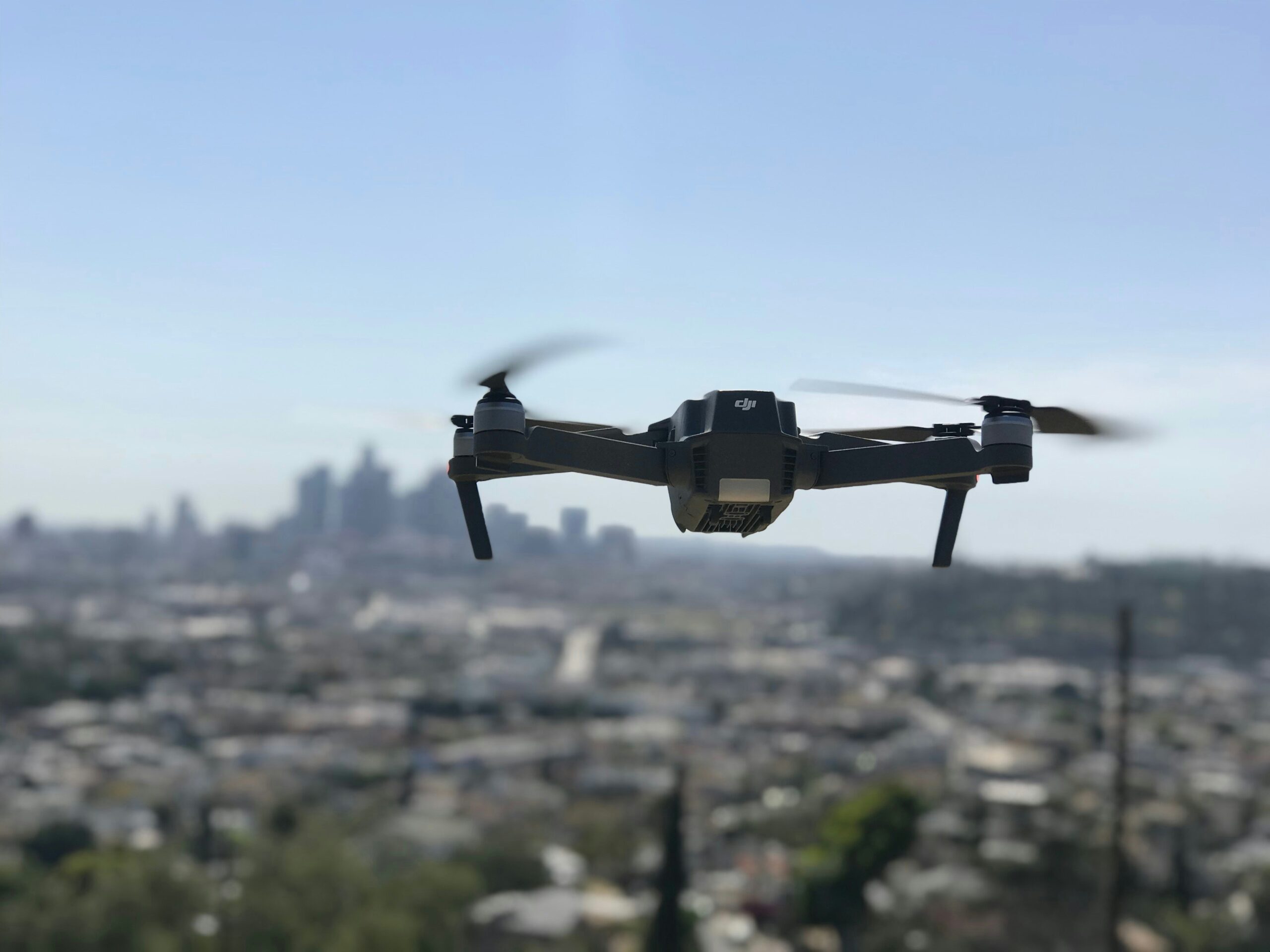
The UK has set out an ambitious vision for commercial drones. Used well, they could support healthcare logistics, infrastructure inspection, emergency response, rural connectivity and lower-emission delivery models. The Government has also linked the sector to significant economic potential, with projected benefits running into tens of billions of pounds by 2030.
Drone corridors sit at the centre of this ambition. In simple terms, a drone corridor is a defined route or operating environment that allows unmanned aircraft to fly beyond the remote pilot’s visual line of sight. This is crucial because drones will only become part of mainstream infrastructure once they can operate safely and predictably across longer distances. For example, while a single drone that can inspect a short stretch of railway is certainly useful, a network of drones that can support routine inspection, delivery or emergency response across regions is a very different proposition.
The UK is not starting from scratch. Trials and approvals have shown that operations beyond visual line of sight can work in specific settings, including rail infrastructure, healthcare logistics and shared airspace projects involving multiple operators. The Civil Aviation Authority’s roadmap also points towards routine BVLOS operations by 2027 and fuller airspace integration beyond 2028.
The remaining challenge is how to move from controlled use cases to commercially sustainable infrastructure.
Project Skyway and the gap between proof and scale
The most visible UK drone corridor project so far was Project Skyway, led by Altitude Angel with support from partners including BT. It created a 165-mile “drone superhighway” connecting areas including Reading, Oxford, Milton Keynes, Cambridge, Coventry and Rugby.
Project Skyway demonstrated that the corridor concept had serious technological substance. However, it also showed how difficult the commercial transition can be. The project ended in January 2025, and Altitude Angel entered administration later that year.
That should not be read as proof that drone corridors have failed, but rather as a warning about the space between innovation funding, regulatory ambition and a market that can pay for infrastructure at scale.
Many emerging infrastructure markets pass through this stage. The early technical case may be strong, and the public policy case may be persuasive, but the commercial framework still has to catch up. Someone has to fund the infrastructure, operate it, maintain it, insure it, license the technology and decide how access will be priced. Finding answers to these questions is key to the success of drone corridors.
Regulation is moving, but agreements will shape the market
The regulatory framework is developing. The CAA has introduced UK SORA, a specific operations risk assessment methodology for more complex drone operations, and its BVLOS roadmap sets out a staged route towards more routine operations. Remote ID, detect-and-avoid technology and unmanned traffic management will all play a role in making wider deployment possible.
Regulatory permission, however, is only part of the picture. Even where the route through regulation becomes clearer, drone corridors will still require a commercial structure that allows different parties to work together with confidence.
Future corridors are unlikely to be built through simple bilateral arrangements. They may involve drone operators, telecoms providers, unmanned traffic management technology businesses, landowners, public bodies, emergency services, insurers and regulators. Each party will bring different risks, responsibilities and commercial expectations to the table.
This creates a need for agreements that deal properly with risk allocation, revenue sharing, access rights, service levels, connectivity failures, data use, intellectual property and regulatory change. If one technology provider fails, what happens to the platform? If connectivity is interrupted during an operation, who carries responsibility? If a corridor is built before demand is mature, how is the investment protected without closing the market to future competition?
These are commercial infrastructure questions as much as they are aviation questions.
The legal issues reach beyond the airspace
Drone corridors also raise legal issues that go wider than flight authorisation. Low-level regular drone operations can touch on airspace rights, trespass, privacy, data protection, nuisance, noise, planning, environmental impact, security and liability for autonomous systems.
Some of these questions remain underdeveloped. For example, the law on airspace above private land was not designed with routine low-level drone corridors in mind. Data protection also becomes more complex when drones carry cameras or sensors through environments where personal data may be captured incidentally.
For the market to mature, these issues will need to be addressed in a way that gives confidence not only to operators and investors, but also to landowners, local authorities, customers and the public. Public acceptance will become increasingly important as drone operations move from isolated trials to visible, repeated use.
What the UK needs next for drone corridors
The UK has a window in which to turn drone corridors from promising projects into usable infrastructure. But that window is not unlimited, and if the market is to develop in line with the CAA’s 2027 and 2028 milestones, the commercial and legal framework will need to mature quickly.
This does not mean importing a single model from another sector – drone corridors are not railways, telecoms networks or toll roads. But those sectors do offer useful lessons about long-term investment, regulated access, service obligations, technology continuity and multi-party contracting.
The next phase should therefore be judged not only by whether drones can fly safely along defined routes, but by whether the agreements underneath those routes are resilient enough to support a market.
That is where much of the real work now sits: in joint ventures, infrastructure contracts, connectivity agreements, technology licensing, access arrangements and the allocation of risk between parties that may have to work together for years.
How Arbor Law can help with drone corridors
Arbor Law advises on the commercial agreements that allow emerging technology markets to scale, including joint ventures, technology licensing, connectivity arrangements, infrastructure contracts, IP protection and risk allocation across complex multi-party ecosystems.
As drone corridors move from trial projects towards commercial deployment, those agreements will become central to whether the market can grow safely and sustainably.
FAQs
What are drone corridors in the UK?
Drone corridors are defined routes or operating environments that allow unmanned aircraft to fly beyond the remote pilot’s visual line of sight. In the UK, they are being developed as part of the wider move towards routine commercial drone operations, including logistics, healthcare deliveries, emergency response and infrastructure inspection.
Why are drone corridors important for UK businesses?
Drone corridors could allow drones to move from isolated trials to repeatable commercial use. For businesses, that could create opportunities in delivery, inspection, monitoring, security, healthcare logistics and remote-area services. The wider significance is that drone corridors may become part of the UK’s future infrastructure, rather than a niche aviation project.
What is BVLOS drone operation?
BVLOS stands for beyond visual line of sight. It refers to drone operations where the aircraft flies beyond the direct visual range of the remote pilot. BVLOS is important because many commercial drone uses depend on longer-distance operations that cannot be managed through short, local flights alone.
What happened to Project Skyway and Altitude Angel?
Project Skyway was one of the UK’s most visible drone corridor projects, creating a 165-mile drone superhighway connecting areas including Reading, Oxford, Milton Keynes, Cambridge, Coventry and Rugby. The project ended in January 2025, and its lead company, Altitude Angel, entered administration later that year. Project Skyway showed that drone corridors can be built and tested, while also exposing the unresolved question of how they can be scaled commercially.
What legal issues do UK drone corridors raise?
UK drone corridors raise legal issues around airspace rights, trespass, privacy, data protection, nuisance, noise, planning, environmental impact, security and liability for autonomous operations. These issues will become more significant as drone operations move from controlled trials towards routine use.
What commercial agreements are needed for drone corridors?
Drone corridors are likely to require joint ventures, infrastructure contracts, connectivity agreements, technology licensing, access arrangements and data-sharing terms. Those agreements will need to deal with risk allocation, service levels, regulatory change, intellectual property, technology continuity and responsibility if something goes wrong.